Why I Stay ~ A reflection by Amanda

Updated: Jul 28
Every person who becomes part of cOMmon arrives in a different way.
Some through curiosity. Some through a conversation. Some because something quietly resonates.
Amanda joined gradually, through conversations, testing, and relationship. We invited her to reflect on what drew her closer, what made her stay, and what carrying cOMmon means to her.
These are her words.
It started with a feeling
For me, it wasn’t just one thing - it was a feeling. I remember first hearing about cOMmon during conversations about how degraded and broken the land is, how knowledge is hoarded or fragmented, and how fragmented our world feels.
We’re drowning in noise, yet starving for connection. We’re hyper-connected digitally, but often disconnected from the people and places around us. cOMmon offered something different: a space to reimagine how we move, share, and belong - together.
What excited me most was the possibility of small, tangible actions that could ripple into something bigger. Not another abstract concept, but a living experiment in collaboration, sustainability, and dignity. It felt like a breath of fresh air in a world obsessed with individualism.
The moment I chose to stay
My connection to cOMmon grew over time - through conversations, testing phases, and feeling out how things worked. Then, when Eve and Jen approached me with an invitation to collaborate and help guide the way forward, something shifted.
That’s when I realised: cOMmon isn’t just about what we do, it’s about who we become together. It was one of those moments when you see people light up because they feel seen, heard, and part of something meaningful. And in that moment, I knew: This is real. This is worth staying for.
Carrying together
To me, “carrying” is about shared responsibility, but not in the heavy, burdensome sense. It’s like passing a baton in a relay race. You run your part, not because you have to, but because you trust the next person to carry it forward when it’s their turn. It’s lightness in togetherness.
Carrying also means holding space for each other’s growth. It’s not about fixing someone else’s struggles, but walking beside them, offering a hand when they stumble and celebrating when they fly.
Growing like an olive tree
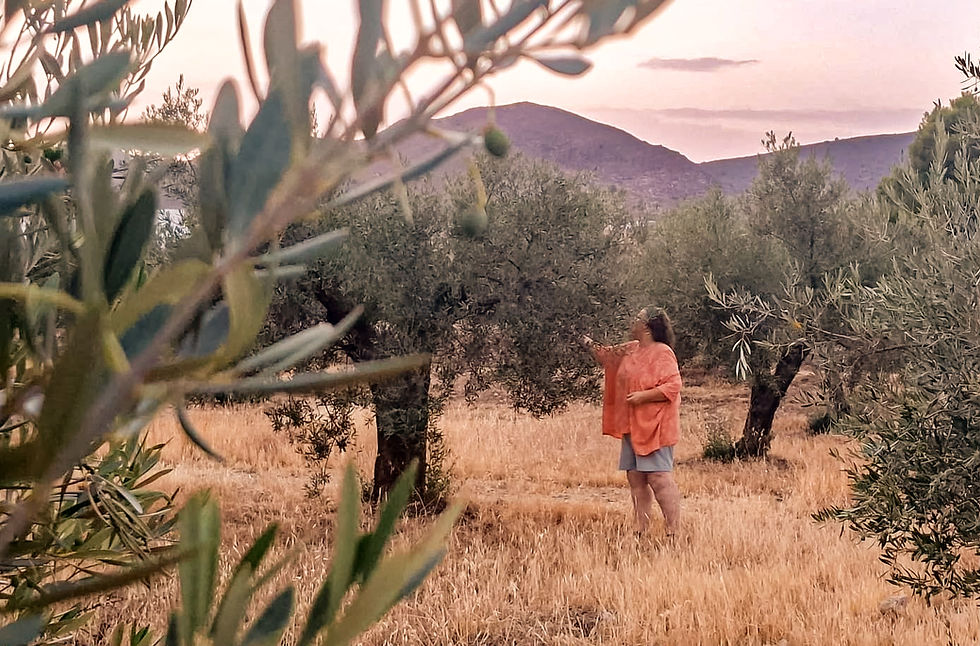
It means co-creation in the soil of community - like the way an olive tree thrives in a polyculture system.
Picture an ancient olive tree, its gnarled branches stretching wide, its roots delving deep into the earth. Around it, companion plants like rosemary, lavender, and wild grasses grow in harmony. The olive tree provides shade and shelter, while the rosemary deters pests and the lavender attracts pollinators. The grasses prevent erosion and return nutrients to the soil. Together, they create a living, resilient ecosystem where each plant contributes to the health of the whole.
But the olive tree does something more: it connects. Its roots intertwine with those of its companions, sharing water and nutrients through a hidden network beneath the soil. For me, this is what it means to grow roots - to sink deep into a place, a community, or a purpose, and to let that grounding inspire growth not just in yourself, but in everything around you.
In cOMmon, we carry the idea that movement isn’t just physical. It’s like the olive tree and its companions: we nourish each other’s growth, share resources, and create something stronger together. When we carry something together, we’re saying: I see you. I’m with you. Let’s grow this - together.
The questions that keep bringing me back
These questions haunt me - and that’s a good thing:
How do we make sustainability feel accessible, not like a chore? Too often, eco-friendly living is framed as sacrifice. What if it felt like joy? Like connection?
How do we rebuild trust in communities where isolation is the norm? Loneliness isn’t just an individual issue; it’s a cultural one. How can we design spaces - literal and metaphorical - where people feel they belong?
What if “movement” wasn’t just about getting from A to B, but about the people we meet along the way? What if the destination was less important than the shared stories we create?
How do we preserve and pass on knowledge in a world where it’s abundant yet fragile? We’re drowning in information, but starving for wisdom. How do we ensure that the knowledge we’ve gained- about the land, about each other, about resilience - doesn’t vanish? How do we plant it in soil where it can take root and grow?
These questions keep me up at night because they matter - not just to me, but to all of us.
What this journey has taught me
I’ve learned that change isn’t linear. Some days, it feels like we’re taking two steps forward and one step back. But progress isn’t about perfection; it’s about showing up, even when it’s messy.
I’ve also learned that people crave meaning more than they crave convenience. We’re willing to slow down, to learn, to fail - if it means we’re part of something that matters.
And perhaps most importantly, I’ve learned that dignity is the foundation. When we treat each other with respect, when we listen more than we speak, when we assume good intentions - magic happens.
What feels exciting?
The unpredictability of it all. We’re building a movement, not a machine. Every meeting, every conversation, every failed experiment teaches us something new. There’s a wild aliveness in not knowing exactly where we’re headed - but trusting that the path will emerge as we walk it.
I’m also thrilled by the diversity of our community. Artists, engineers, teachers, retirees - people from all walks of life and different countries are finding common ground in cOMmon. That’s where the real innovation happens.
What still feels uncertain
Honestly? Everything. Not in a paralysing way, but in an inviting way.
Will we scale without losing our soul?
How do we balance digital connection with real-world presence?
Can we truly make sustainability the default rather than the exception?
Uncertainty isn't a bug. It's a feature of every meaningful journey. It keeps us humble, adaptive and open.
What I hope grows from here
I hope cOMmon becomes a verb, not just a noun. Not just an organisation, but a way of being.
I hope we see micro-communities sprouting up everywhere - where people share tools, skills, and meals; where cities design spaces that invite connection; where no one feels invisible. I hope we see healing, both in the soil and in our communities. That we learn to tend to the earth as we tend to each other, recognising that one cannot thrive without the other.
I hope we bring the world together - not in grand gestures, but in small, intentional acts of care. That we build bridges (or perhaps olive groves) where division once stood. And most of all, I hope we act with urgency, because the climate crisis isn’t some distant threat - it’s here, breathing down our necks. But urgency doesn’t have to mean despair. It can mean planting seeds today for the forests we’ll never walk through, the clean air we’ll never take for granted, the future we’re still fighting for.
Most of all, I hope we remember that movement is a metaphor for life. Sometimes you’re the one leading, sometimes you’re following, sometimes you’re just standing still, catching your breath. But you’re never alone - and neither is this work.
Why I stay
What drew me closer was the authenticity of the people involved. No performative activism. No empty slogans. Just a group of humans trying to figure it out together.
What made me stay? The people. The ones who show up, the ones who challenge me, the ones who remind me that community isn’t a buzzword - it’s a lifeline.
What's next?
Amanda reminds us that carrying isn't something one person does alone.
It happens when people each take responsibility in their own way, at their own moment, trusting that others will do the same.
As more people become part of cOMmon, we're discovering that there isn't just one way to contribute. There are many.
In our next reflection, we'll explore the different roles that help carry cOMmon, and how those roles together form the cooperative we're gradually building.